
When I started working with clients with Hashimoto’s, after my own healing journey, I had a few clients with multiple chemical sensitivities who were sensitive to almost EVERYTHING.
They would react to candles, scents, and new construction. I would recommend a simple vitamin, and they would react to it. Eliminating foods didn’t seem to help their long list of symptoms either.
I had been recommending various lab tests, diets, and vitamins to them, but to no avail! No matter what these clients did, they seemed to continue to struggle with their symptoms.
I am a lifelong learner, so I am always taking various functional medicine courses, and at the time, I recall learning about using liver-supportive herbs, amino acids, and nutrients for super-sensitive people.
When the liver is overwhelmed with processing various daily chemical exposures (toxins from medications, cosmetics, partially digested foods, pollution, mold, etc.), a person can become “backlogged” in their ability to clear out toxins, leading to numerous symptoms and sensitivities, including fatigue, brain fog, digestive issues, headaches, skin issues, and food sensitivities.
I didn’t know what else to do, so I recommended a liver protocol to these clients, and I was shocked at how much better they felt. One of them felt better in weeks than she had in years, while another one mentioned that she was finally able to walk past the Yankee Candle store at the mall without getting sick. She was excited to go Christmas shopping at the mall with her daughter. 🙂
My clients reported better digestion, clearer skin, more energy, clearer thinking, better fat digestion, less bloating, and being able to lose weight without trying. They also told me they were able to tolerate foods, toxin exposures, and supplements that they previously couldn’t.
I personally didn’t have multiple chemical sensitivities, so I figured that toxins didn’t really apply to me.
I learned to manage many of my symptoms by eliminating a lot from my life, but it felt like a game of whack-a-mole.
I didn’t realize that my liver was overwhelmed with the toxins from my medications, cosmetics, partially digested foods, and the breakdown of all the antibodies I was forming to my own body.
I kept reacting to more and more things, so I would eliminate more things, until those clients who got better with liver support inspired me to dig into toxins and support my own liver as well!
Over the years, I’ve used liver support methods to clear out arsenic toxicity and mold toxicity, and as a bonus, I noticed that my seasonal rhinitis and conjunctivitis somehow cleared out! I used to repeat the protocol once a year, and I spent many years living a 99 percent clean lifestyle, so I was symptom-free as long as I followed my clean living routine. These days, I’ve learned how to support my detox pathways on a daily basis, so I can do a lot of things that I couldn’t do before.
I can travel, use perfume and non-organic hair products, use detergents, get my nails done, color my hair, and eat most food without suffering the consequences, because I know how to clear my toxic backlog through proper liver support.
I will be opening the doors to my annual Root Cause Reset Program next year – stay tuned and subscribe to my newsletter to be the first to know when it’s available again!
In the Reset program, we’ll do a deep dive into how to support your detox pathways, but in the meantime, I wanted to share a bit more about one of the tools I use.
In this article, you will learn:
- Why people with Hashimoto’s have impaired detox pathways
- Signs you may have a toxic backlog or an overburdened liver
- Liver support strategies
- Liver support protocols – once-a-year vs. quarterly vs. daily
Why Do People with Hashimoto’s Have Impaired Detox Pathways?
Our bodies are constantly processing and eliminating the chemicals and toxins we encounter on a daily basis. We’re exposed to them through the air we breathe, the foods we eat, personal care and cleaning products, medications, and our surrounding environment (such as pollution, plastics, and mold toxins). The liver plays a major role in processing many of these compounds, preparing them for elimination. When the body is dealing with a high overall toxic load, supporting these elimination pathways becomes especially important.
For many people with Hashimoto’s, the gut can be another piece of the puzzle. We eliminate many toxins through our bowel movements, and constipation is a common symptom of hypothyroidism. Slower transit time means waste spends more time moving through the digestive tract and can get reabsorbed back into the body, putting an extra burden back on the liver. This is one reason why pooping regularly is so important, and a slowdown in the digestive tract can translate to a backup of toxins in the body.
Low thyroid hormone levels can also affect body temperature and sweating, and many people with Hashimoto’s find that they don’t sweat as much. Sweating is another important way the body excretes toxins, and research has found that certain toxins, like cadmium and nickel, will be more concentrated in our sweat than in our urine. [1] Again, this shunts the burden back to the liver to detoxify these compounds.
Together, these factors make it more likely for people with Hashimoto’s to have a higher toxic burden, which may place additional demands on the body’s natural detoxification and elimination pathways.
How the Liver Helps with Toxins
The liver is an important organ that is responsible for a multitude of processes: it filters the blood, stores glucose for energy, produces and secretes bile for fat digestion, and is necessary for converting T4 to T3, the active thyroid hormone. [2] It’s also our primary detoxification organ.
The liver has two pathways for detoxification. The elimination of toxins is done through a two-step enzymatic process.
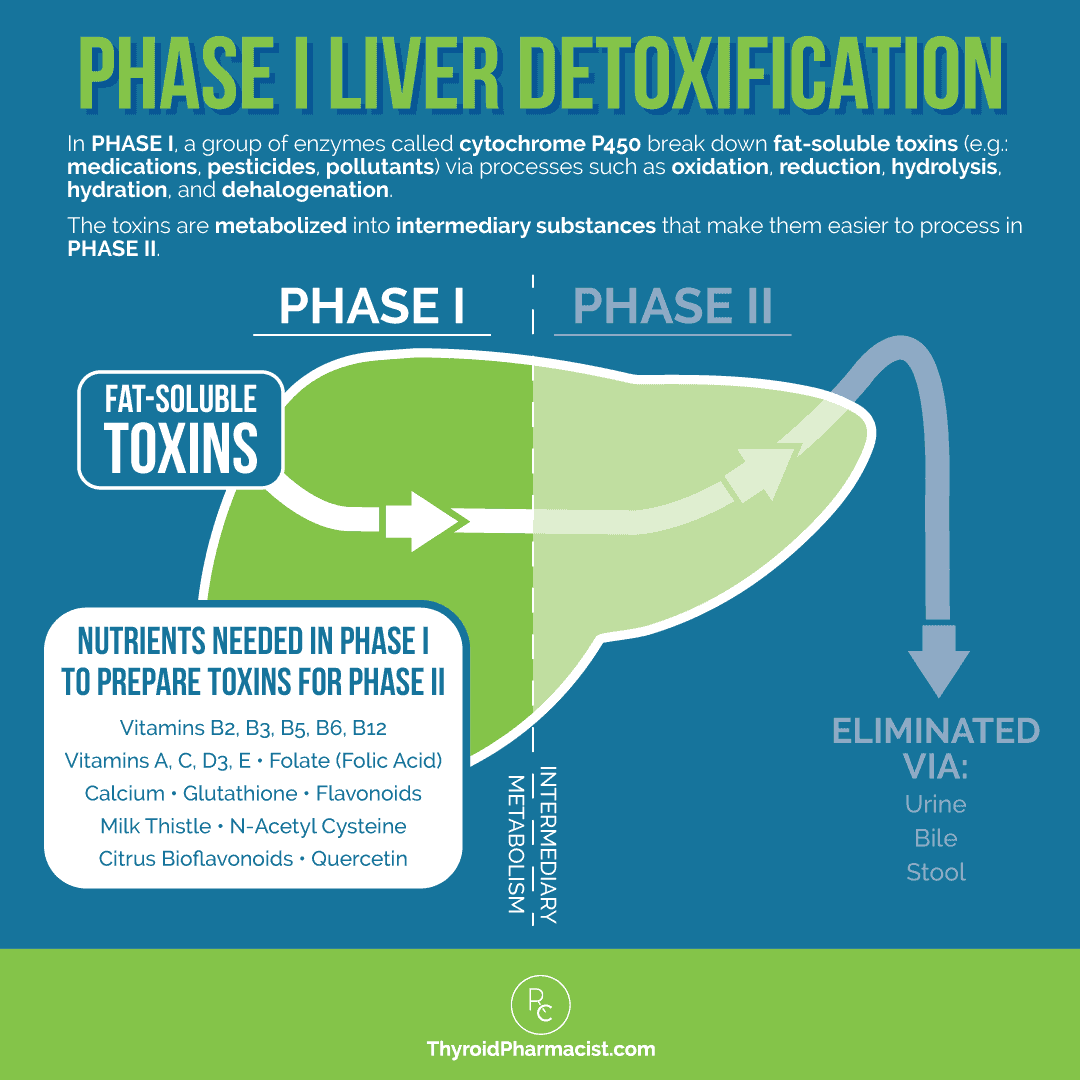
The Phase I Detoxification Pathway
Phase I of liver detoxification involves the clearing out of toxins that are stored inside our fat cells. This phase utilizes chemical processes like oxidation, reduction, hydrolysis, hydration, and dehalogenation of fat-soluble toxins. There are a number of nutrients needed to support this phase, including vitamins B2, B3, B5, B6, B12, folate, glutathione, and flavonoids. These nutrients clear out the toxins from our fat cells and prepare them for elimination in Phase II.
These freed-up toxins can worsen the body’s toxic load if Phase II doesn’t appropriately kick in afterwards to remove them.
The Phase II Detoxification Pathway
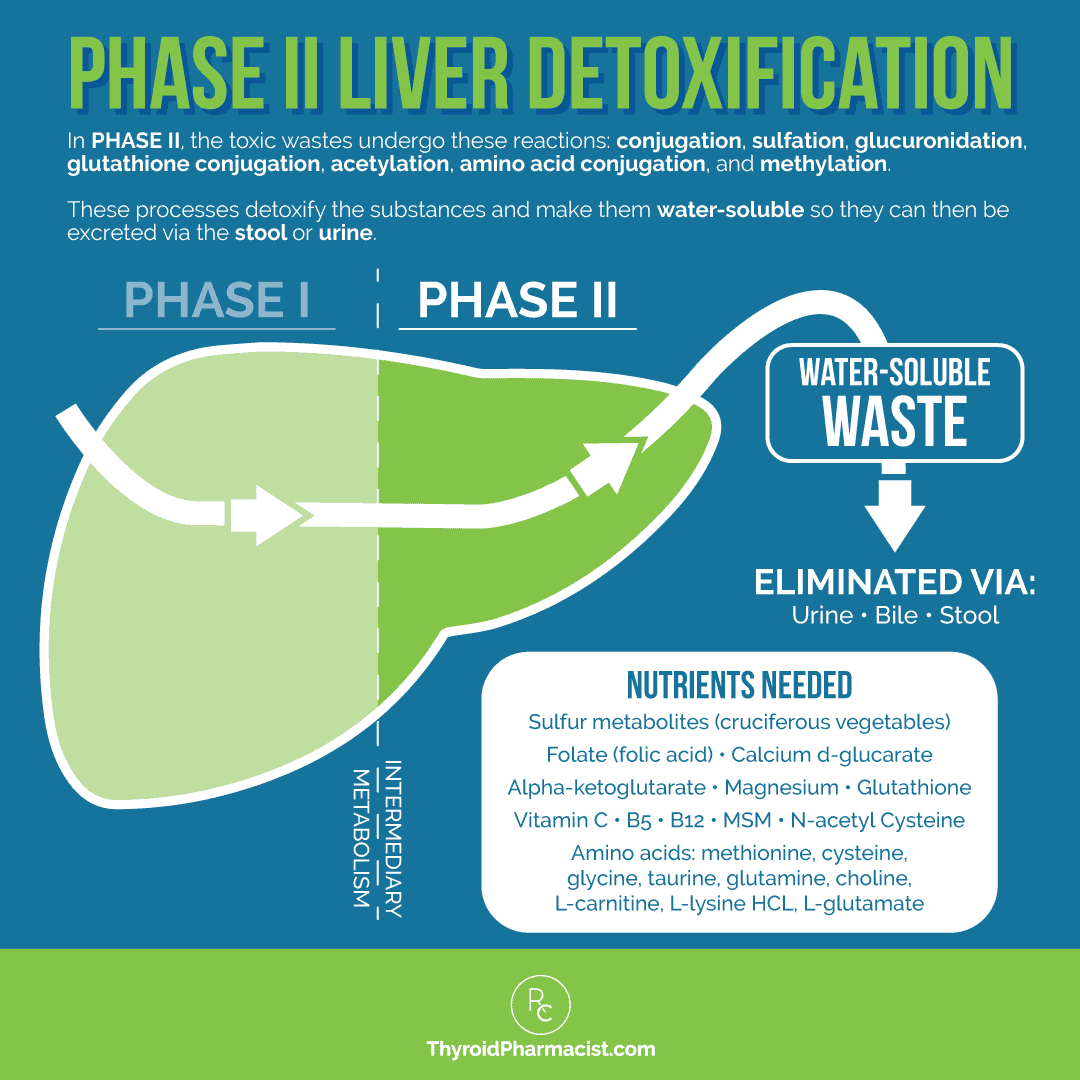
Phase II is all about removing the freed-up toxic waste created in Phase I. This phase includes sulfation (adding a sulfur group), glucuronidation (adding glucuronide), glutathione conjugation (pairing), acetylation (adding an acetyl group), amino acid conjugation, and methylation. Amino acids play a pivotal role in the efficiency of Phase II. If the body is deficient in certain amino acids (this is very common in Hashimoto’s due to protein malabsorption), the pollutants freed up in Phase I can become more toxic.
Phase II needs amino acids and other nutrients, including methionine, cysteine, glutamine, glycine, taurine, magnesium, glutathione, alpha-ketoglutarate, vitamins B5 and B12, vitamin C, folate, and choline.
Note that methylation, which occurs during Phase II, will be impaired if you have the MTHFR gene variation.
Liver Backlog and Toxic Overload
When there’s a constant influx of compounds that need to go through the detoxification process, we become depleted of the vitamins and nutrients required for the liver to do its job.
With ongoing exposure and without supporting our ability to clear out toxins, our detox pathways may become overwhelmed and overburdened, and we end up with a toxic backlog.
I think of the liver as an office worker who needs the right kind of tools to process an incoming stream of paperwork, or else the paperwork keeps piling up on her desk.
Toxins may build up and circulate in our bodies or become stored in our fat instead of being properly excreted. I see some people gain a lot of weight to compensate and to “dilute” the toxins in their fat, while others may not gain weight and instead gain numerous excessive symptoms, as well as reactions to substances that are normally harmless. Some individuals gain weight and gain symptoms!
Another thing that happens when we have a toxic backlog is that the body doesn’t want toxins floating around, so it stores them in our fat cells for safekeeping (I know that sounds crazy, but it’s true!). [3] I have found that weight gain, excess fat, and weight loss resistance can be consequences of too many toxins. The body is always adapting to our environment and trying to keep us healthy and safe.
Sometimes this leads to hormonal imbalance (or hormone hoarding as I call it), as the body is unable to properly metabolize estrogen. This leads to estrogen dominance (often causing weight gain in the thighs and abdomen, as well as cellulite) and inhibits the body’s ability to properly produce T4 thyroid hormone, leading to poor production of the active thyroid hormone (T3).
How do you know if you have an overburdened liver?
In my experience, the five biggest red flags are chemical sensitivity, weight loss resistance, neurological issues (brain fog, irritability, headaches, and fatigue), hormonal imbalances, and skin issues. [4] Individuals may have just one symptom cluster, while others have all five.
- Chemical Sensitivity: Have you ever walked into a department store, caught a whiff of perfume or candles, and suddenly developed a headache, nausea, fatigue, or brain fog? During Phase I detoxification, the liver begins breaking down chemicals, medications, hormones, and other compounds. Phase II then transforms those intermediate compounds so they can be safely eliminated through bile, stool, and urine. When Phase I is moving faster than Phase II, or when the total incoming burden exceeds the body’s ability to process and eliminate it, reactive compounds may remain in circulation longer, contributing to oxidative stress and inflammatory reactions. This may explain why someone with a toxic backlog can become increasingly sensitive to fragrances, cleaning products, alcohol, medications, supplements, and even substances they previously tolerated. I also consider asthma and allergies as a form of chemical sensitivity.
- Weight Loss Resistance: The liver plays a central role in blood sugar regulation, fat metabolism, hormone clearance, and the conversion of T4 into active T3, all processes that can influence metabolism and our ability to maintain a healthy weight. [5] Many environmental compounds are also fat-soluble, meaning they can be stored in fat tissue when the body isn’t able to eliminate them efficiently. In functional medicine, we learn that “the solution to pollution is dilution,” so the body’s fat literally expands to store the extra toxins. When we begin burning fat, some of these compounds may be released back into circulation, potentially adding to the liver’s workload, so the body tries to keep things in homeostasis, preventing us from getting too many toxins in our circulation. At the same time, impaired insulin signaling, inflammation, suboptimal thyroid hormone conversion, and impaired estrogen clearance can all make it more difficult for the body to let go of excess weight. This doesn’t mean toxins are the reason you can’t lose weight, but if you’re doing everything “right” and still experiencing weight loss resistance, supporting your liver and natural detoxification pathways may be one overlooked piece of the puzzle.
- Skin Issues: Itchy skin, dry skin, rashes, breakouts, eczema, and other skin issues can also be a sign of liver backlog. Our skin often gives us visible clues about what is happening inside the body. When bile flow, detoxification, or bowel elimination is sluggish, compounds that should leave the body through the stool may instead recirculate and contribute to inflammation. The liver also helps process hormones, histamine, medications, and other substances that may influence itching, rashes, eczema, and breakouts. Meanwhile, low thyroid hormone can reduce sweating, oil production, and skin cell turnover, contributing to the dry, rough skin that is so common with hypothyroidism. This combination of impaired clearance, inflammation, hormonal imbalance, and low thyroid function can create a perfect storm for stubborn skin concerns.
- Neurological Issues: The brain is especially sensitive to changes in inflammation, oxidative stress, and circulating metabolic byproducts. When the liver cannot efficiently process toxins, these substances and the inflammation they generate may affect mitochondrial energy production and brain function. Impaired liver function may also interfere with the conversion of T4 into active T3, leaving the brain and muscles without enough of the “go” hormone they need. This may contribute to fatigue, weakness, headaches, poor concentration, and that frustrating feeling of brain fog.
- Hormonal Imbalance: Once hormones have completed their work, the liver transforms them into metabolites that can be eliminated through bile, stool, and urine. If these detoxification pathways are sluggish, or if constipation prevents the metabolized hormones from leaving the body efficiently, some estrogen may be deconjugated in the gut and reabsorbed into circulation. This can contribute to an imbalance between estrogen and progesterone, sometimes referred to as estrogen dominance. Symptoms may include PMS, breast tenderness, heavier or more painful periods, headaches, irritability, and fluid retention.
Additional symptoms correlated with an impaired detox include digestive problems, including gas, diarrhea, constipation, bad breath, joint pain, and right-sided chest pain.
How to Support Your Detox Pathways
There are many small ways you can incorporate liver support into your daily routine, and many people find that when they are intentional with these habits, they feel much better overall.
Here are my top strategies for daily liver support:
- Remove triggering foods: Foods such as gluten, dairy, sugar, soy, alcohol, and caffeine are common sensitivities for those with Hashimoto’s and can irritate the gut, contribute to toxin build-up, and disrupt nutrient absorption.
- Incorporate liver-loving foods: Add these foods to your daily diet for gentle liver support: hot lemon water, beets, cruciferous vegetables, cilantro, fiber, sprouts and seedlings, green juices and chlorophyll, fermented foods, turmeric, and berries. I love starting mornings with some hot lemon water (which can actually increase thyroid medication absorption), followed by a green smoothie, as a simple way to get these foods in. (Note that it is recommended to wait at least 30 to 60 minutes after thyroid medication before eating or drinking caffeine.)
- Exercise: Movement increases blood circulation and assists in moving lymph fluid throughout the body (an important part of removing toxins from the body). While any kind of movement is going to be beneficial, rebounding (jumping on a mini trampoline) is especially effective when it comes to stimulating the lymphatic system.
- Sweat: Sweating is one of the best ways to get rid of toxins. [6] In fact, certain toxins, like cadmium and nickel, will be more concentrated in our sweat than in our urine. I love getting a great sweaty workout, Epsom salt baths, or using the sauna three to four times per week for 20-minute sessions (you’ll want to work up to that if you’re new to the sauna). Hot yoga is also great!
- Targeted supplements: Targeted nutrients and antioxidants such as vitamin E, biotin, quercetin, and milk thistle can help support healthy liver function and the body’s natural Phase I and Phase II detoxification pathways. Amino acids as standalones and from protein breakdown also supply important building blocks needed for these pathways.
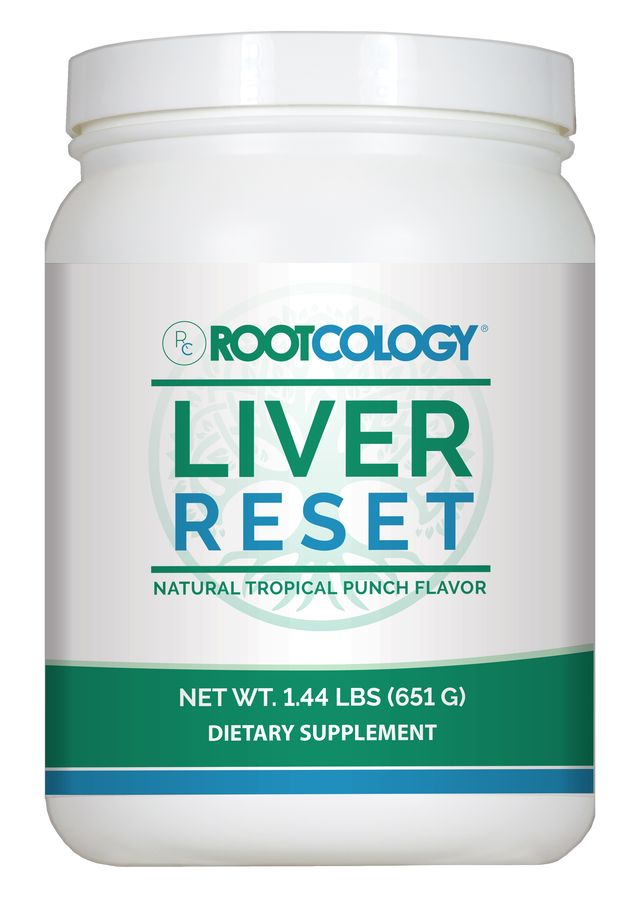
I formulated Rootcology Liver Reset specifically for those with Hashimoto’s to provide gentle and effective detoxification support. Liver Reset contains a natural pea protein isolate to fuel detoxification pathways, as well as nutrients and antioxidants (including vitamin E, biotin, quercetin, and milk thistle) needed to support both phase I and phase II detoxification pathways for safe detoxification. It also includes a comprehensive array of herbal hepatics and cholagogues to promote healthy liver function and elimination.* I love that instead of taking multiple pills everyday, everything you need for comprehensive liver support is in this powder.
Liver Reset Smoothie Recipe
I love to add Liver Reset to smoothies for a nutrient-packed drink that supports healthy liver function. This light, refreshing, and nourishing Liver Reset drink is an easy way to support daily detoxification. Perfect for busy days when you want a quick, effective, and delicious way to care for your liver!
Ingredients:
- 1 scoop Liver Reset Powder
- ½ cup blueberries
- ½ cup cucumber slices
- 1 large lettuce leaf (or a small handful of greens)
- 1 cup sparkling water
- 1 scoop Rootcology protein powder (optional)
How to Make It:
- Add all ingredients to a blender.
- Blend until smooth.
- Pour over ice and enjoy!
Why These Ingredients?
- Liver Reset Powder – Packed with targeted liver-supportive nutrients like NAC, milk thistle, and glutathione precursors, it helps to maintain normal liver function and antioxidant support. The new formula tastes better than ever, making it easy to enjoy daily!
- Blueberries – These antioxidant-rich berries provide polyphenols and vitamin C, which support the body’s natural antioxidant defenses. Blueberries also support the gut microbiome, which plays a crucial role in eliminating toxins.
- Cucumbers – Cucumbers contain silica and vitamin K, which contribute to overall hydration and support normal liver function.
- Lettuce (or Greens) – Greens like lettuce provide chlorophyll, along with folate and B vitamins, which support cellular health and normal metabolic processes.
- Sparkling Water – A fun, refreshing twist that helps with hydration, an essential factor in our overall health.
- Protein Powder (Optional) – The liver needs amino acids to process toxins effectively. A clean protein source provides glycine, cysteine, and methionine – key building blocks for glutathione, the body’s master antioxidant (check out Rootcology’s protein powder for high-quality options).
My brand new eBook has recipes for more liver-supporting smoothies. You can get a free copy for a limited time with the purchase of Liver Reset!
Liver Reset Protocols
You can incorporate Liver Reset Powder into your routine in several simple ways – whether you want to use it daily or periodically. I’ll give a brief overview of each method and who it might be appropriate for.
Two Weeks – Once-a-Year Protocol
This is the original way I would have my clients use the Liver Reset powder. This approach works really well for people in their twenties and early thirties, who have cleared out their toxic triggers and are sweating regularly (i.e., using a sauna, hot yoga). Think of the “clean girls” who live a low-tox lifestyle.
For this method, use:
- 1 scoop per day, for 7 days, to replace one meal
- 2 scoops per day, for 7 days, to replace two meals
You can add a scoop into a smoothie to make it a full and satisfying meal, and get the benefits of the fruits and veggies. (My new eBook, which is free for a limited time with your Liver Reset Powder purchase, has tons of good recipes for this purpose!)
Two Weeks – Every 3-6 Months
This method is for people who aren’t necessarily struggling with ongoing symptoms, but who have ongoing exposures. This is me right now – I don’t eat perfectly, and I use some “toxic” things like nail polish and scented products. This regular liver support gives me peace of mind and helps me keep feeling my best, even when my lifestyle isn’t perfect.
You can use the same method as the once-a-year protocol, but simply repeat it every three to six months.
Daily Use
Incorporating a scoop of Liver Reset Powder into your daily routine may be especially beneficial for those with ongoing or increased exposure to factors that can place additional demands on the liver, including mold exposure, medications, HRT, perimenopause, estrogen-related concerns, environmental toxins, and gut issues. It can also be a helpful addition if you’re still working on cleaning up your overall routine and struggle with numerous symptoms.
I used this personally for a few months back in 2022, when I was dealing with mold exposure and had new symptoms, like hormonal issues including frequent very heavy periods, insomnia, anxiety, dry, “old-looking” skin, brain fog, loss of muscle, and weight gain that appeared out of nowhere.
I was told it was perimenopause and that I should just take progesterone. Spoiler alert, that didn’t work! The progesterone did make me calmer and helped me sleep better, but my frequent periods and the other symptoms continued. I actually lost five pounds without trying within the first two weeks of liver support, and my skin began to glow again. After a few months, my menses began to regulate as well, though I did have to get iron infusions because I was so iron-depleted!
For this method, you can simply add it to a smoothie or mix it with water or another beverage of your choosing, and drink it daily.
How My Approach Evolved Over the Years
I initially shared my Liver Protocol in 2017 in my popular book, Hashimoto’s Protocol. At that time, it was a two-week protocol. For many years, I recommended liver support as a periodic or, at most, a once-a-year detox. I believed that this type of targeted protocol was enough to “reset” the body and support detoxification pathways.
However, many of my clients would ask if they could use the liver support methods regularly, as they felt amazing while using them, and their symptoms would come creeping back within a few months after the protocol ended.
At first, I was a bit hesitant, but then I realized that our modern world is far more toxic than ever before. [7] Exposure to environmental toxins, endocrine disruptors, plastics, mold, heavy metals, and even daily metabolic waste is at an all-time high. This means that our livers are working overtime – every single day.
Many people, especially those with Hashimoto’s and sluggish thyroid function, struggle with phase 2 detox pathways, meaning toxins can recirculate and cause fatigue, brain fog, skin issues, and other symptoms. [8] The liver is also where T4 is converted to the active thyroid hormone T3, so liver support can be incredibly beneficial for the thyroid!
Additionally, I’ve found daily liver support to be a must for symptoms of perimenopause. The liver is responsible for metabolizing excess estrogen and eliminating it, as well as balancing hormone ratios. [9] If liver function is sluggish, estrogen dominance can occur, leading to symptoms like weight gain, bloating, mood swings, heavy periods, and headaches.
Furthermore, I’ve realized that for those who have been exposed to mold, supporting detox pathways may actually be a three-month to two-year-long process, versus a one-time deal. (This is especially relevant for people who still live in moldy environments.)
Given this constant toxin load, I no longer believe that liver function is something to “reset” once a year for everyone – for some people (especially symptomatic and sensitive ones), it’s something to support daily, much like taking a multivitamin or probiotics.
These days, I recommend daily interventions and strategies to help keep detox pathways open and support liver function.
Takeaway
In our modern environment, it’s more important than ever that you support your liver, and it can be an especially important piece of the healing puzzle for many people with Hashimoto’s.
While some situations require a more intensive liver support protocol (see my full liver article or refer to the Liver Protocol in my book Hashimoto’s Protocol for more in-depth information and support), many of us will benefit from gentle, daily liver support.
What has your experience been with liver support?
I hope this encourages you, and I wish you all the very best on your healing journey! 🙂
I love interacting with my readers on social media, and I encourage you to join my Facebook, Instagram, TikTok, and Pinterest community pages to stay on top of thyroid health updates and meet others who are following similar health journeys. For recipes, a FREE Thyroid Diet start guide, and notifications about upcoming events, be sure to sign up for my email list!
References
[1] Sears ME, Kerr KJ, Bray RI. Arsenic, cadmium, lead, and mercury in sweat: a systematic review. J Environ Public Health. 2012;2012:184745. doi:10.1155/2012/184745
[2] Kalra A, Yetiskul E, Wehrle CJ, Tuma F. Physiology, Liver. In: StatPearls. Treasure Island (FL): StatPearls Publishing; May 1, 2023.
[3] Jackson E, Shoemaker R, Larian N, Cassis L. Adipose Tissue as a Site of Toxin Accumulation. Compr Physiol. 2017;7(4):1085-1135. Published 2017 Sep 12. doi:10.1002/cphy.c160038; Jandacek R, Liu M, Tso P. Interactions of Body Weight Loss with Lipophilic Toxin Storage: Commentary. J Nutr. 2024;154(3):801-803. doi:10.1016/j.tjnut.2024.01.018
[4] Casey G. Diseases of the Liver. Nurs N Z. 2016;22(11):20-24.; Polis S, Fernandez R. Impact of physical and psychological factors on health-related quality of life in adult patients with liver cirrhosis: a systematic review protocol. JBI Database System Rev Implement Rep. 2015;13(1):39-51. doi:10.11124/jbisrir-2015-1987
[5] Rhyu J, Yu R. Newly discovered endocrine functions of the liver. World J Hepatol. 2021;13(11):1611-1628. doi:10.4254/wjh.v13.i11.1611
[6] Sears ME, Kerr KJ, Bray RI. Arsenic, cadmium, lead, and mercury in sweat: a systematic review. J Environ Public Health. 2012;2012:184745. doi:10.1155/2012/184745
[7] Sokan-Adeaga AA, Sokan-Adeaga MA, Sokan-Adeaga ED, et al. Environmental toxicants and health adversities: A review on interventions of phytochemicals. J Public Health Res. 2023;12(2):22799036231181226. Published 2023 Jun 29. doi:10.1177/22799036231181226
[8] Piantanida E, Ippolito S, Gallo D, et al. The interplay between thyroid and liver: implications for clinical practice. J Endocrinol Invest. 2020;43(7):885-899. doi:10.1007/s40618-020-01208-6
[9] Tsuchiya Y, Nakajima M, Yokoi T. Cytochrome P450-mediated metabolism of estrogens and its regulation in human. Cancer Lett. 2005;227(2):115-124. doi:10.1016/j.canlet.2004.10.007




Leave a Reply