LISTEN TO THE PODCAST – Also available on Spotify and Apple Podcasts
In this episode of Thyroid Pharmacist Healing Conversations, I interviewed renowned integrative psychiatrist Dr. James Greenblatt about a topic that is really near and dear to my heart… depression. Depression doesn’t always respond to “medication-only” approaches, and it also may not respond to the best well-meaning “wellness hacks”.
Dr. Greenblatt takes a whole mind-body approach and we explore how nutrient status, hormones, digestion, genetics, infections, toxins, and even cholesterol levels can influence mood – and why testing (not guessing) is central to personalized care.
You’ll hear us dig into practical, clinician-vetted starting points: which labs to run first (and the ranges that actually matter), how vitamin D, B12, iron/ferritin, amino acids, and omega-3s can shift outcomes, why low stomach acid and poor protein digestion often masquerade as anxiety/depression, and how celiac disease/gluten intolerance, mycotoxins, and post-infectious syndromes (PANS/PANDAS) can show up with psychiatric manifestations We also talk about nutritional lithium (lithium orotate) – what it is (and isn’t), how it differs from prescription lithium, and what careful monitoring looks like for people with thyroid issues.
If you or someone you love has felt “stuck” on the mental health treadmill, this conversation offers a science-based, hopeful map forward.
What you’ll learn in this episode:
- Why depression isn’t necessarily a “Prozac deficiency.” Modern research has moved beyond a single-neurotransmitter theory, and depression can stem from many biological drivers: nutrient gaps, hormone shifts, gut issues, toxins, infections, and genetics. Addressing these foundations often makes therapy and medications work better, and sometimes reduces the need for them.
- The lab work most people never get (but should). We walk through vitamin D, B12, iron/ferritin, and a full thyroid panel as accessible first steps, then expand to amino acids, fatty acids, copper/zinc balance, celiac screening, and targeted functional tests. Optimal, not just “normal,” ranges matter, especially for B12 and vitamin D.
- Digestion is destiny for neurotransmitters. You can eat protein all day, but low stomach acid and weak digestive enzymes mean you won’t liberate the amino acids needed to make serotonin, dopamine, and more. Correcting HCl and enzyme deficits can lift mood by restoring raw materials, particularly in those with reflux, thyroid issues, or trauma histories that push the nervous system out of “rest-and-digest.”
- The quiet saboteurs: gluten, mycotoxins, infections, and very low cholesterol. Celiac disease/gluten intolerance can drive global malabsorption – along with anxiety, depression, and even eating-disorder patterns. Mold/mycotoxins and post-infectious syndromes (PANS/PANDAS, Lyme, post-viral) can inflame the brain. And very low total cholesterol (often genetic) correlates with depression and higher suicide risk.
- Nutritional lithium, clarified. Lithium orotate (low-dose “nutritional lithium”) is different from high-dose lithium carbonate. At low milligram doses, it has been utilized for mood stability and even dementia risk reduction in emerging research. For thyroid health, it is important to monitor labs, personalize dosing, and distinguish carefully from prescription lithium, as dose and monitoring make the difference.
- Medications: a both/and approach. Antidepressants can be appropriate and lifesaving for some; others can successfully taper when foundations are optimized. The aim is personalization: start with biology (labs, nutrients, digestion), layer therapy and meds as needed, and keep revisiting root causes as you heal.
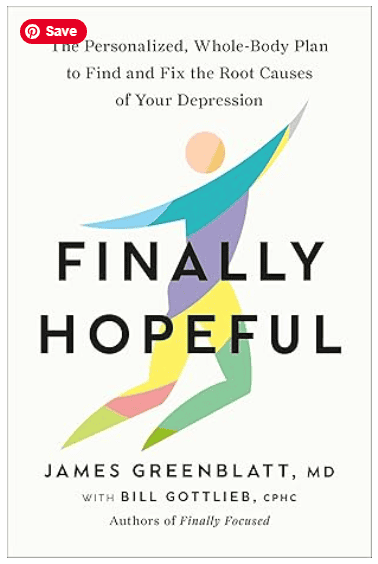
Check out Dr. Greenblatt’s new book!
If depression has ever felt like a moving target – part biology, part mystery – Dr. James Greenblatt’s new book, Finally Hopeful, offers clarity and direction. A pioneer in functional psychiatry, Dr. Greenblatt shows that depression isn’t only in your head; it’s also in your body, influenced by nutrients, hormones, digestion, genetics, and inflammation. This practical guide helps you uncover your root causes, understand key lab work, and create a personalized plan with your clinician to finally move toward lasting relief. Preorder Finally Hopeful – available on Amazon.
Guest Resources / Connect with Dr. James Greenblatt
- Finally Hopeful: The Personalized, Whole-Body Plan to Find and Fix the Root Causes of Your Depression by Dr. James Greenblatt – A groundbreaking personalized model for psychiatric treatment of depression that helps readers identify their body’s unique interplay of nutritional factors, biochemistry, lifestyle and genetics for effective and lasting care. Preorder your copy today!
- Learn more at Dr. Greenblatt’s Website
- Psychiatry Redefined – Training, patient education, and courses on integrative psychiatry.
- Follow Dr. Greenblatt on Instagram, Facebook, LinkedIn, and YouTube
- Suicide Prevention Training for Clinicians at Psychiatry Redefined – I have lost loved ones to suicide, and I wish every health care professional had access to this training.
Supplements We Discussed
- Vitamin D3 – Rate-limiting for serotonin synthesis; optimizing levels can improve mood, cognition, and immune balance. Consider Pure Encapsulations Vitamin D.
- Vitamin B12 (sublingual or injections) – Addresses neurological symptoms, anxiety, and fatigue; treat under 500 pg/mL even if the lab calls it “normal.” Consider Pure Encapsulations B12.
- Iron/Ferritin – Low ferritin can present as depression/anxiety and insomnia; repletion often calms the nervous system (pregnancy/postpartum included). Consider Pure Encapsulations Optiferrin-C.
- Amino Acids – The building blocks of neurotransmitters; consider if protein intake is good but mood is not. Consider Rootcology Amino Support.
- Digestive Enzymes with HCl – Improve protein breakdown and amino acid absorption; especially helpful for those who have reflux, hypothyroidism, and/or a history of trauma. Consider Rootcology Betaine with Pepsin.
- Omega-3 Fish Oil – Supports membrane fluidity and anti-inflammatory signaling; consistently linked with lower depression and suicide risk. Consider Pure Encapsulations EPA/DHA Essentials.
- Nutritional Lithium (Lithium Orotate, low dose) – Not the same as prescription lithium; considered for mood stability and neuroprotection with thyroid-aware monitoring. Consider Pure Encapsulations Lithium Orotate.
- Cholesterol Supplement – For very low total cholesterol states associated with mood and suicidality; typically paired with lipase to support absorption.
- Zinc – Addresses high-copper/low-zinc patterns that can worsen anxiety, irritability, and attention. Consider Pure Encapsulations Zinc 30.
Other Tools and Resources
- Basic Labs (covered by most insurance): Vitamin D, B12, CBC, CMP, ferritin, full thyroid panel (TSH, free T4, free T3, antibodies).
- Celiac Screen – Tissue transglutaminase (tTG-IgA) and total IgA; consider endoscopy if indicated.
- Amino Acid & Fatty Acid Profiles – Helps reveal malabsorption and neurotransmitter precursors. Please refer to Dr. Greenblatt’s new book for more information.
- Copper/Zinc & Hair Mineral Analysis – Screens for high copper/low zinc patterns that affect mood.
- Organic Acids Test (OAT) – Mosaic Diagnostics for mitochondrial markers, nutrients, dysbiosis, and toxins.
- Mycotoxin Testing – If mold exposure is suspected (home/office/car).
- PANS/PANDAS Evaluation – For abrupt pediatric neuropsychiatric symptoms post-infection.
- Cholesterol & Lipid Absorption Workup – If total cholesterol is <140 mg/dL or “oddly” low relative to diet, this might be a relevant cause of mood disorders.
Books and Articles About Brain/Thyroid Health
- Finally Hopeful: The Personalized, Whole-Body Plan to Find and Fix the Root Causes of Your Depression by Dr. James Greenblatt – A personalized model for depression that helps readers identify their body’s unique interplay of nutritional factors, biochemistry, lifestyle, and genetics, for effective care. Preorder your copy here.
- Nutritional Lithium: The Cinderella Story: The Untold Tale of a Mineral That Transforms Lives and Heals the Brain by Dr. James Greenblatt – Deep dive into low-dose lithium for brain health.
- Finally Focused: The Breakthrough Natural Treatment Plan for ADHD That Restores Attention, Minimizes Hyperactivity, and Helps Eliminate Drug Side Effects by James Greenblatt MD and Bill Gottlieb – Nutrient-based solutions for ADHD.
- Could Nutritional Lithium Benefit or Hurt Hashimoto’s?
- Root Causes of Depression and Hashimoto’s
- The Surprising Effect of Zinc Deficiency on Hashimoto’s
- The Benefits of Vitamin D for Your Thyroid
- How Balancing Iron Levels Can Help Your Thyroid
- Is Gluten the Root Cause of Your Thyroid Condition?
- Mold: A Potential Trigger of Hashimoto’s
- The Surprising Effect of Zinc Deficiency on Hashimoto’s
- The Benefits of Amino Acids for Hashimoto’s
- Why Essential Fatty Acids Are Essential for Hashimoto’s
- How B12 Deficiency Affects Hashimoto’s
Get the Full Episode Transcript
Let’s Connect!
- Follow me on Instagram: @izabellawentzpharmd
- Get my FREE weekly thyroid & gut health newsletter: Sign up here
- Subscribe & Review: If you loved this episode, please leave a review on Apple Podcasts or rate it on Spotify!
Got questions? Drop them in the comments! 🙂
About Our Host
Dr. Izabella Wentz
Dr. Izabella Wentz is a compassionate, innovative, solution-focused integrative pharmacist dedicated to finding the root causes of chronic health conditions. Her passion stems from her own diagnosis of Hashimoto’s thyroiditis in 2009, following a decade of debilitating symptoms.
Dr. Izabella Wentz has written several best-selling books, including the New York Times bestseller Hashimoto’s Thyroiditis: Lifestyle Interventions for Finding and Treating the Root Cause, the protocol-based #1 New York Times bestseller Hashimoto’s Protocol: A 90-Day Plan for Reversing Thyroid Symptoms and Getting Your Life Back, the Wall Street Journal bestseller Hashimoto’s Food Pharmacology: Nutrition Protocols and Healing Recipes to Take Charge of Your Thyroid Health, and Adrenal Transformation Protocol. Her latest book, IBS: Finding and Treating the Root Cause of Irritable Bowel Syndrome, will be released on March 17, 2026, and is available for pre-order here.
Thyroid Pharmacist Blog
Instagram
Facebook
TikTok
Rootcology
About Our Guest
A pioneer in the field of functional and integrative medicine, board-certified child and adult psychiatrist, James M. Greenblatt, MD, has treated patients since 1988. After receiving his medical degree and completing his psychiatry residency at George Washington University, Dr. Greenblatt completed a fellowship in child and adolescent psychiatry at Johns Hopkins Medical School. Dr. Greenblatt has lectured internationally on the scientific evidence for nutritional interventions in psychiatry and mental illness. He is the author of seven books, including Answers to Anorexia, Finally Focused, and Functional & Integrative Medicine for Antidepressant Withdrawal. He is also the author of the upcoming book Finally Hopeful: The Personalized, Whole Body Plan to Find and Fix the Root Causes of Your Depression.
Dr. Greenblatt was inducted into the Orthomolecular Hall of Fame in 2017 by the International Society of Orthomolecular Medicine. He is also the founder of Psychiatry Redefined, an educational platform dedicated to the transformation of psychiatry, which offers online courses, educational webinars, and fellowships for professionals.



Dear Doctor Wentz,
I think you may have answered a piece of the puzzle…my HDL is always very low and I suffer with suicidal feelings at times and get Baker Acted, so I am wondering if Doctor Greenblatt is correct about increasing the fat or I am not understanding it correctly?? I also have schizophrenia since I was in my early twenties and am old now, so I guess it doesn’t really matter much anymore, if I get better or not. But it’s always nice to feel better anyway…Thank you for your podcasts, I watch because I have hypothyroid issues but I can never get a Doctor to tell me if I have Hashimotos or not. I have tried several times, but it never gets done, so all I know is that I am hypothyroid. I have gotten a lot healthier listening to your shows and books and I thank you…very much.
Michelle, My heart goes out to you, and I’m so sorry you’ve been dealing with so much. You matter, and it does matter if you feel better, at any age.
Low HDL can sometimes reflect low healthy fat intake, inflammation, or nutrient imbalances, and Dr. Greenblatt’s point about healthy fats may be relevant for overall brain and hormone support. This is very individual, especially when medications are involved, so working with a qualified practitioner who can review your full history and labs is important. Many people who are told they are “just hypothyroid” are never tested for Hashimoto’s. Blood tests for TPO and TG antibodies can help clarify this and guide next steps to discuss with your healthcare provider. Thank you for sharing your experience and for listening to the podcasts and reading the books. I’m grateful they’ve been helpful for your learning and health journey. If you’re interested, I do have a practitioner directory on my website with clinicians who are familiar with root-cause and functional approaches to thyroid and mental health concerns. It may be a helpful place to start if you’re looking for someone who will take the time to listen and review your full picture. Here are some resources:
FUNCTIONAL MEDICINE APPROACH TO THE THYROID
https://thyroidpharmacist.com/articles/functional-medicine-approach-to-the-thyroid
CLINICIAN DATABASE
https://thyroidpharmacist.com/database-recommended-clinicians/
FIND A FUNCTIONAL MEDICINE CLINICIAN
https://ifm.org/find-a-practitioner/
Recommended Compounding Pharmacist list
https://thyroidpharmacist.com/database-recommended-compounding-pharmacies/
Dr Wentz, This is MIchelle again…I was wondering if your new book on IBS would be helpful for me, because I have mild Crohn’s. I know that I am already autoimmune, but it is mild. That is why I am trying to work on it, because I am trying to reverse it if it is possible, even the thyroid issues. I looked up the practitioners on your list and there are several within about an hour from where I live. I don’t have a lot of resources, so I have to save for a while, before I can go to those practitioners. But it is on my radar of things to do!! And I thank you for your reply and this new book you have written. It seems like just what I need, because the Gastroenterologist wants to put me on steroids. I picked up the prescription, but I have not started, I have been avoiding these medications that they have been trying to get me to take for the past few years. I believe that is why my case is mild, he he!! Michelle
Thank you for reaching out, Michelle, and I’m so glad you’re being proactive about your health. While my new book focuses on IBS, many of the root-cause strategies, such as supporting the gut barrier, microbiome balance, and reducing inflammation, may also be helpful for people with inflammatory bowel conditions like Crohn’s. That said, the book is not a substitute for medical care or individualized treatment.
I can’t advise you to stop or avoid medications prescribed by your gastroenterologist, as untreated inflammation can lead to complications. I encourage you to discuss your concerns and goals with your doctor so you can make an informed decision together. Some people use a combined approach of conventional and integrative strategies under medical supervision.
I’m glad to hear you’re considering working with a practitioner when you’re able, many people find that addressing gut and immune triggers can be very helpful alongside appropriate medical care. Wishing you the very best on your healing journey, and thank you so much for your kind words about the book.