LISTEN TO THE PODCAST – Also available on Spotify and Apple Podcasts
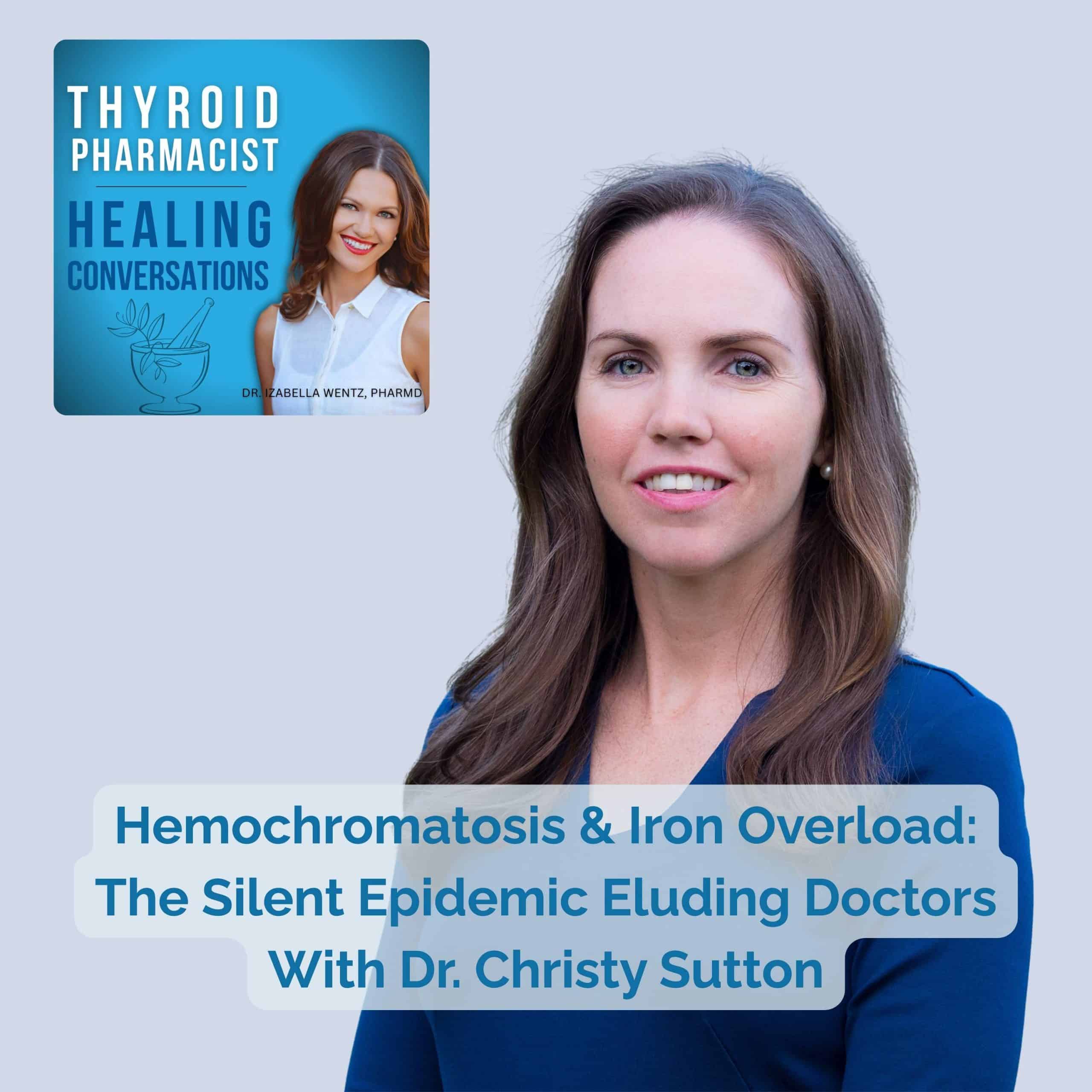
Iron is a nutrient we need… but when we accumulate too much of it, it can quietly become a wrecking ball. In this episode of Thyroid Pharmacist Healing Conversations, I interviewed Dr. Christy Sutton about iron overload (also known as hemochromatosis) – a condition that can affect millions, yet often goes undiagnosed for years.
This topic is deeply personal for me. My husband went from being a marathon runner to struggling with fatigue, widespread pain, insomnia, irritability, and mood changes, and his iron overload also contributed to inflammatory bowel disease (IBD) flares. What finally raised the red flag was elevated liver enzymes during routine bloodwork… and when we dug deeper, we found high ferritin and abnormal iron markers.
Dr. Sutton explains why hemochromatosis isn’t as “rare” as many people assume, how it can impact the thyroid, liver, pancreas, brain, hormones, and gut, and why simple, inexpensive testing can be life-changing.
Iron overload is incredibly problematic – but so is iron deficiency (low ferritin), which is very common in people with Hashimoto’s. While this episode focuses on excess iron, it’s important to understand that both extremes can contribute to fatigue, hair loss, brain fog, mood changes, and poor thyroid hormone conversion.
Many people with thyroid disease fluctuate between low ferritin earlier in life and iron overload later (especially postmenopause), which is why ongoing monitoring is so critical.
What you’ll learn in this episode:
- Why “high ferritin” shouldn’t automatically be brushed off as “just inflammation.” Ferritin can rise with inflammation, but when it is paired with high iron saturation, it may signal true iron overload. Dr. Sutton explains how reviewing a full iron panel, especially transferrin and iron saturation, helps distinguish between inflammation-driven ferritin and excess iron so patients know whether to calm inflammation, remove iron, or both.
- The symptom “grab bag” that can point to iron overload. Dr. Sutton walks through how excess iron can affect the liver (fatigue, elevated enzymes), pancreas (insulin resistance/diabetes), brain (brain fog, mood changes), joints (pain), hormones (fertility issues), and gut (IBD/IBS and infections that thrive on iron).
- The simple labs that can catch this early (and why many people still don’t get them). A basic iron panel that includes TIBC or UIBC, serum iron, and iron saturation, along with ferritin and a CBC, is often enough to identify a problem. These tests are inexpensive and accessible, yet frequently overlooked. Dr. Sutton explains why iron saturation above 45 percent with elevated ferritin is an important warning sign.
- Why women may “fly under the radar” until perimenopause/menopause. Menstruation and pregnancy naturally lower iron stores, which can mask iron overload. Once bleeding stops, iron levels can quietly rise, especially in women with genetic risk. Ongoing monitoring is important (for both women and men).
- The “carrier myth” can delay diagnosis. Being told someone is “just a carrier” of a hemochromatosis gene does not mean they are protected. Even one gene can increase risk, and iron overload can develop without classic genetics. Dr. Sutton explains how this misunderstanding can delay diagnosis and treatment.
- How to support iron overload beyond blood donation. Therapeutic phlebotomy is only one of many strategies for lowering excess iron. Dr. Sutton discusses dietary adjustments, nutrients that reduce iron absorption, such as quercetin and berberine, and iron chelators such as curcumin and alpha-lipoic acid that may help remove iron from tissues and reduce oxidative stress.
I’ve got a new book coming out!
Thyroid patients often have other symptoms in the body, including gut issues. Through my thyroid healing journey, I’ve learned so much about healing the gut that I decided to write a book about it! My new book, IBS: Finding and Treating the Root Cause of Irritable Bowel Syndrome, is a comprehensive guide that reveals how irritable bowel syndrome is often a catch-all diagnosis that overlooks treatable root causes. It offers a step-by-step approach to help readers understand what’s really driving gut symptoms, and how to create a personalized plan to restore gut health and overall wellness. The book is available for preorder here and will be released on March 17, 2026! For a limited time, you can claim 3 free preorder bonuses before it’s released, including a sneak peek of the IBD chapter!
Guest Resources/Connect with Dr. Christy Sutton
- Watch the The Iron Curse workshop
- Learn more at Dr. Sutton’s Website
- Follow Dr. Sutton on Instagram and Facebook
- Read The Iron Curse: Is Your Doctor Letting High Iron Destroy Your Health? Simple Steps to Know If High Iron is the Root of Your Health Problems, and Easy Protocols to Save and Restore Your Health by Christy Sutton – Learn what high iron does to the body and why, how to diagnose hemochromatosis, other iron disorders, and anemias using simple labs and genetic testing, as well as learn natural ways to support healthy iron levels and healing.
- Read Genetic Testing: Defining Your Path to a Personalized Health Plan by Christy Sutton – Gain access to cutting-edge scientific research for a holistic and truly effective approach to understanding and preventing health problems based on your genes. This is an exploration of epigenetics, nutrigenomics, and a guide to use with your doctor to help create a personalized health plan.
Supplements Mentioned in This Episode
- Milk thistle (silymarin) – An iron chelator, traditionally used to support liver health and oxidative stress; we used this as part of my husband’s comprehensive protocol.
- Curcumin (turmeric extract) – Supports inflammatory balance and antioxidant status; discussed as an iron chelator. Consider Rootcology Curcumin Absorb.
- Quercetin – A potential support for reducing iron absorption and supporting inflammatory balance.
- Berberine – Reduces iron absorption and can also be helpful for blood sugar support (important because iron overload can impact the pancreas and metabolic health). Consider Rootcology Berberine.
- Lactoferrin – Binds iron in the gut (especially relevant when gut infections are a concern). Consider Jarrow Formulas Lactoferrin.
- IP6 – Dr. Sutton shares why she doesn’t use it as often compared to other tools. Consider Pure Encapsulations IP6.
- Glutathione – Antioxidant/liver support. Consider Rootcology Pure N-Acetyl Cysteine.
- Phosphatidylcholine – May support liver and lipid metabolism in certain cases.
Lab Recommendations
- Ulta Lab Tests is my go-to spot for self-ordering your labs, which you can later submit to your insurance for reimbursement; after reimbursement, the labs are usually quite affordable. (Be sure to check with your individual insurance to make sure they allow this.) Here, you can order:
- The Root Cause Nutrition Panel tests for B12, ferritin, vitamin D, CMP, and CBC levels. The CMP (complete metabolic panel) and CBC (complete blood count) reveal your electrolyte levels, as well as how your cells are doing, how the liver and kidneys are functioning, and whether you are at risk for anemia. (The results typically come back “normal” for most people with Hashimoto’s, but it’s important to have these done to rule out anything serious.)
- An Iron, TIPC, and Ferritin Panel assesses iron storage, transport, and availability.
- A Transferrin/Iron Saturation Test – Low levels of transferrin can point to serious health issues like liver disease, malnutrition, or chronic illness; this is the most critical marker.
- A CRP test can help differentiate inflammation-related ferritin elevation (versus iron overload)
- A UIBC (Unsaturated Iron Binding Capacity) test measures how much unused transferrin (the protein that carries iron) is available in your bloodstream, helping assess iron levels and diagnose conditions like iron deficiency or iron overload.
- Consumer genetic testing – 23andMe or AncestryDNA raw data may be used with third-party tools to explore risk.
- Clinical genetic testing – Companies that do this include LabCorp and Quest Diagnostics
Other Tools and Resources
- Therapeutic phlebotomy/blood donation – An “iron-lowering” tool that can be effective, but is not appropriate for everyone (especially if anemia is present).
- Coffee or tea with meals – That is a way to reduce iron absorption from a meal.
- Sauna & exercise – Can help you sweat out small amounts of iron and support overall wellness.
- Testing well water for iron – An overlooked contributor to iron overload in some regions.
- Elevation/hypoxia – A possible factor for increased red blood cell production in some cases (my husband noticed major improvements after moving to sea level).
Books and Articles About Thyroid Health, Iron & Root Causes
- IBS: Finding and Treating the Root Cause of Irritable Bowel Syndrome by Dr. Izabella Wentz – available for preorder here. If you preorder before its release on March 17th, you can claim 3 free preorder bonuses, including a dedicated chapter on inflammatory bowel disease (IBD) and gut inflammation, which can be worsened by iron overload. Download your free IBD chapter!
- Adrenal Transformation Protocol by Dr. Izabella Wentz – Offers practical tips on iron deficiency, testing, and supplementation in the case of a deficiency, which is often correlated with adrenal dysfunction.
- How Balancing Iron Levels Can Help Your Thyroid
- The 7 Most Common Nutrient Deficiencies in Hashimoto’s
- Blood Sugar, Hashimoto’s, Ozempic, Metformin & Berberine
- Turmeric for Your Thyroid and Hashimoto’s
Get the Full Episode Transcript
Let’s Connect!
- Follow me on Instagram: @izabellawentzpharmd
- Get my FREE weekly thyroid & gut health newsletter: Sign up here
- Subscribe & Review: If you loved this episode, please leave a review on Apple Podcasts or rate it on Spotify!
Got questions? Drop them in the comments! 🙂
About Our Host
Dr. Izabella Wentz
Dr. Izabella Wentz is a compassionate, innovative, solution-focused integrative pharmacist dedicated to finding the root causes of chronic health conditions. Her passion stems from her own diagnosis of Hashimoto’s thyroiditis in 2009, following a decade of debilitating symptoms.
Dr. Izabella Wentz has written several best-selling books, including the New York Times bestseller Hashimoto’s Thyroiditis: Lifestyle Interventions for Finding and Treating the Root Cause, the protocol-based #1 New York Times bestseller Hashimoto’s Protocol: A 90-Day Plan for Reversing Thyroid Symptoms and Getting Your Life Back, the Wall Street Journal bestseller Hashimoto’s Food Pharmacology: Nutrition Protocols and Healing Recipes to Take Charge of Your Thyroid Health, and Adrenal Transformation Protocol. Her latest book, IBS: Finding and Treating the Root Cause of Irritable Bowel Syndrome, will be released on March 17, 2026, and is available for pre-order here.
Thyroid Pharmacist Blog
Instagram
Facebook
TikTok
Rootcology
About Our Guest
Dr. Christy Sutton is a chiropractor who is interested in asking why health problems happen and finding the safest and least problematic solutions. Getting to the root of the problem and creating generational health are the foundation of her writing, teaching, and clinical practice.
She is the author of The Iron Curse and Genetic Testing: Defining Your Path to a Personalized Health Plan. She created the Genetic Detoxification report, and teaches about using genetics, lab testing, and a good history, to create a personalized health plan and avoid health landmines before they go off.



Hello. First off, I love listening to your podcasts. They are so informative.
I have a comment on the sound on all of your podcasts. I have my volume as loud as it will go, but have trouble hearing you and your guests. I listen to a lot of podcasts, and yours is the only one that I can’t hear very well. The sound that comes through sounds tinny and like you’re far away. Just some feedback. Thanks!
Heidi, Thank you so much for listening and for your kind words❤️ I really appreciate your feedback about the audio—I’ll share this with our team so we can look into improving the sound quality. It means a lot that you take the time to let me know!